
Legal Challenge Against Illinois Crypto Tax Gains Support from DOJ and Industry Groups
Written with artificial intelligence.
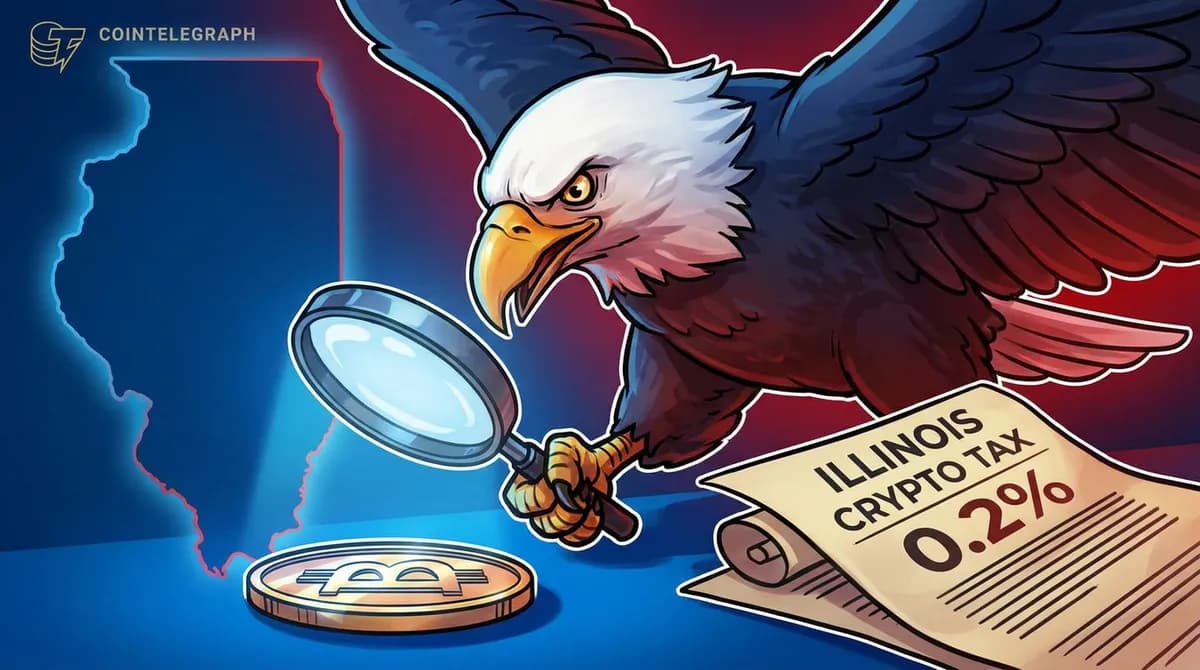
A coalition including the U.S. Department of Justice and various business groups is contesting Illinois’ 0.2% tax on digital asset transactions, which applies regardless of profit. Critics argue the tax could raise compliance costs and violate federal law.
Overview of the Legal Challenge
The U.S. Department of Justice, alongside business and financial groups, has backed a legal challenge against Illinois' newly enacted 0.2% digital asset tax. This tax applies to cryptocurrency transactions even when no profit is realized, raising concerns about increased compliance costs for businesses and potential violations of federal law.
Details of the Illinois Crypto Tax
Enacted in June, the tax will apply to the value of digital assets exchanged, transferred, or stored, regardless of whether a profit is made. Illinois had projected that this tax would generate $60 million in revenue for the fiscal year 2027. Originally set to take effect on January 1, 2027, the implementation has been postponed to July 1, 2027, allowing time for ongoing legal disputes.
Concerns Raised by Industry Groups
In filings, the U.S. Chamber of Commerce and the Securities Industry and Financial Markets Association (SIFMA) warned that the tax could significantly impact banks, broker-dealers, and asset managers nationwide, placing an undue financial burden on customers. They highlighted that customers could owe taxes even when incurring losses, and that transactions between accounts might incur taxes without actual sales or profits.

Arguments from the Justice Department
The Justice Department has expressed that the Illinois tax undermines federal initiatives aimed at encouraging cryptocurrency innovation. They argue that this digital asset tax could conflict with federal policies designed to promote the sector, such as the Strategic Bitcoin Reserve and the GENIUS Act, which outlines stablecoin regulations.
Implications for DeFi and Software Developers
The coalition of decentralized finance (DeFi) firms also raised concerns regarding tax collection responsibilities. They argue that the proposed rules might unfairly place the burden of tax collection on software developers and blockchain participants who typically do not have access to customer information or control over user funds. This could lead to significant compliance challenges for those involved in the DeFi sector.