
Bitget Hackers Transfer $4 Million into Zcash's Private Pool
Written with artificial intelligence.
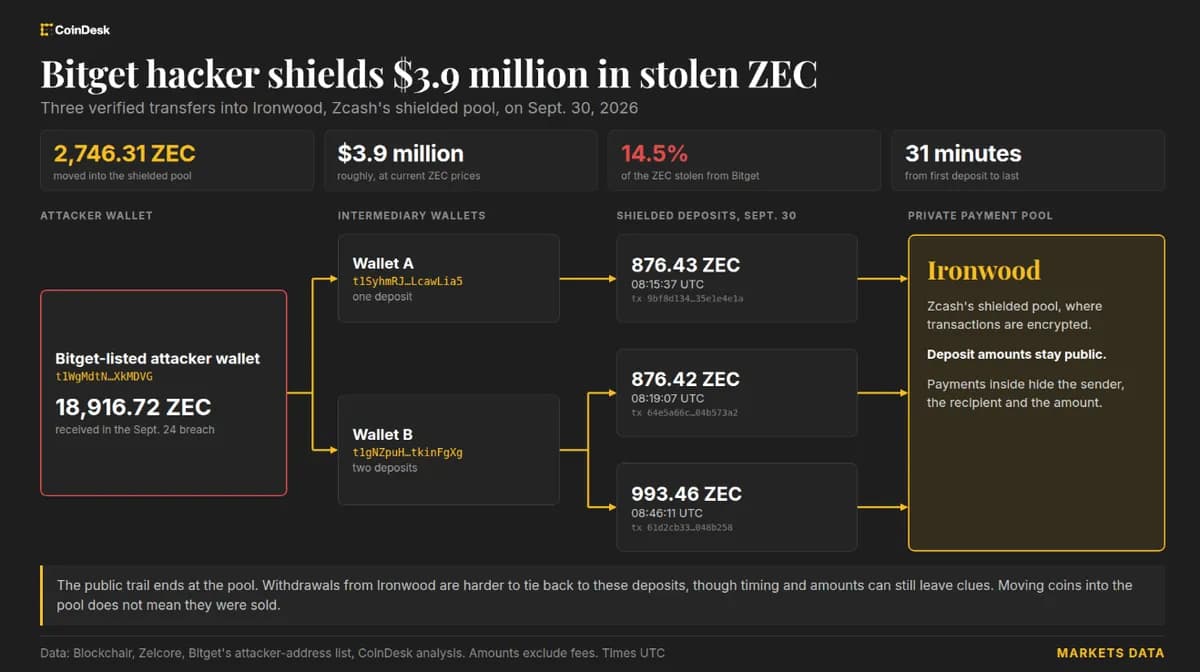
Hackers linked to Bitget's $387.5 million breach have moved approximately $3.9 million in zcash (ZEC) into Ironwood, the cryptocurrency's private payment system. This transfer obscures the funds' origins, complicating recovery efforts by the exchange.
Overview of the Transfer
Wallets associated with the recent Bitget hack have transferred nearly $3.9 million in zcash (ZEC) into Ironwood, Zcash’s private payment system. This move aims to make tracing the stolen funds more difficult as the exchange attempts to recover them.
Details of the Transactions
According to CoinDesk's analysis, the transfer comprised three transactions made between 08:15 and 08:46 UTC, totaling 2,746 ZEC. The movements were flagged by blockchain investigator ZachXBT, who noted that the funds flowed through two intermediary addresses linked to the hacker's wallet, which had received approximately 18,917 ZEC during the breach on September 24.
Implications for Recovery Efforts
Zcash supports both public and private transactions. While investigators can track the amount entering Ironwood, the specifics of sender, recipient, and amount are hidden within the shielded pool. If the stolen funds return to a public address, the exit amounts will become visible, allowing investigators to analyze timing and other metadata to identify potential links. However, the Zcash protocol does not provide a direct transaction trail.
Context of the Funds Movement
The three deposits into Ironwood account for about 15% of the total stolen ZEC. In addition, other portions of the stolen funds have been moved across different blockchains via swap services. CoinDesk previously traced around $6.3 million in ether-to-bitcoin swaps conducted through THORChain, which left a public record of the transactions.
This situation illustrates the ongoing challenges faced by exchanges in recovering funds lost to hacks, especially when hackers utilize privacy-enhancing technologies.